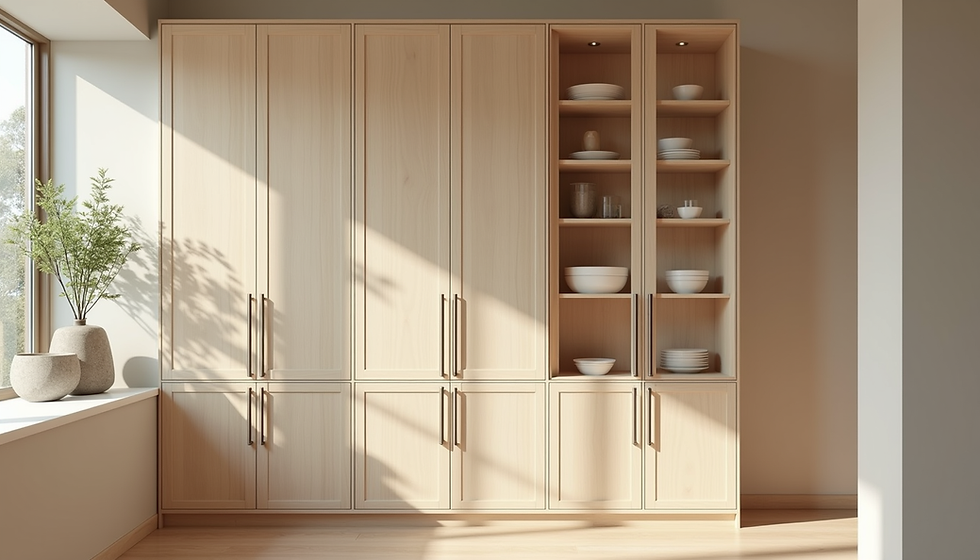
Custom Feature Wall Cabinetry for a Beautiful Built In Look

A feature wall should feel like it belongs in the room, not like it was pushed against the wall after the design was finished. That is the difference between a row of store-bought cabinets and a true built-in feature wall.
Feature wall cabinetry brings storage, display space, and architectural character together in one focal point. It can frame a fireplace, turn a blank living room wall into a media center, create a beautiful home office backdrop, or add practical storage to a dining room, entryway, bedroom, or den.
The challenge is fit. Walls are rarely perfect. Ceilings are not always level. Outlets, vents, windows, floors, trim, fireplaces, and TVs all affect the final design. Big box stores can sell cabinet parts, shelves, and modular pieces, but they do not have the same ability to create a beautiful, custom, built-in look feature wall that fits the home, the room, and the way the space is used.
That is where Tidewater’s custom approach makes the difference.

Why feature wall cabinetry changes the whole room
A feature wall does more than fill space. It gives the room a clear center.
In a living room, it can create a balanced media wall with storage below and display shelves above. In a family room, it can hide games, blankets, electronics, and remotes while keeping favorite books and décor on display. In a dining room, it can provide the look of a built-in hutch without the need for a freestanding piece of furniture. In a home office, it can turn an ordinary wall into a camera-ready backdrop with closed storage, open shelving, and a polished finish.
The best feature walls work because they combine function and visual weight. They are not just decorative. They solve real problems.
A well-designed feature wall can help with:
Hiding clutter behind doors and drawers
Creating a clean place for a TV and media equipment
Displaying books, art, photos, ceramics, and collectibles
Balancing a fireplace or large blank wall
Adding storage without crowding the room
Making a space feel more finished and valuable
The built-in look matters because it changes the way the cabinetry relates to the room. Instead of standing in front of the wall, the cabinetry feels connected to the architecture. It reaches the right height. It lines up with trim and ceiling details. It accounts for the depth of nearby walls, windows, and furniture. It feels intentional.
That kind of result is hard to get from standard cabinet sizes.
Why big box cabinets often fall short
Big box stores are useful for many home projects. They offer accessible products, basic storage options, and ready-made pieces that can work in simple spaces. But feature wall cabinetry is not a simple product. It is part furniture, part storage, part architectural detail.
A feature wall has to fit the room in ways a standard cabinet line usually cannot.
Most modular systems come in fixed widths, heights, and depths. If the wall is too wide, fillers are added. If the ceiling is too high, a gap remains. If the outlet is in the wrong place, the plan changes around it. If the fireplace is slightly off-center, the whole design can look awkward. The finished wall may provide storage, but it rarely looks truly built in.
That is the common problem with off-the-shelf feature walls. The eye notices the compromises.
Gaps at the ceiling. Uneven filler strips. Cabinet depths that do not line up. Shelves that are too shallow for the items they need to hold. TV openings that look either cramped or oversized. Doors that do not match the scale of the room. Trim that stops and starts instead of flowing across the wall.
A custom feature wall avoids these issues because it starts with the space, not with a product box.
Store-bought pieces
Limited sizes, standard depths, visible gaps, fewer finish choices, basic layouts.
Custom Tidewater cabinetry
Designed for the wall, tailored storage, built-in proportions, coordinated finish, planned trim details.
There is also a quality difference in the planning process. A store can help select items from a catalog. Tidewater can design cabinetry around the specific needs of the client, the dimensions of the wall, and the way the room is used every day.
That matters when the goal is not just “more cabinets.” The goal is a beautiful built-in look.
What Tidewater can customize
Tidewater can customize feature wall cabinetry to fit each client’s needs. That means the design can respond to the home instead of forcing the home to adapt to standard parts.
A custom feature wall may include closed cabinets, drawers, open shelves, floating shelves, glass doors, inset lighting, decorative panels, crown molding, base trim, fireplace surrounds, TV openings, hidden wire management, and display niches. The exact mix depends on the room.
A family with young children may want more closed storage near the floor. A book lover may need strong shelves sized for hardcovers. A client with a large TV may want the screen centered with balanced storage on both sides. Someone who loves to decorate seasonally may want adjustable shelving and deeper display areas.
Custom design also helps with the details that are easy to overlook.
The wall dimensions can guide the design
Not every wall has the same opportunity. Some are wide and open. Others include windows, vents, returns, sloped ceilings, or an existing fireplace. Tidewater can work with these features rather than treating them as obstacles.
A narrow wall may call for tall vertical cabinetry and open shelves to make the room feel higher. A wide wall may need a mix of upper and lower elements to avoid looking heavy. A fireplace wall may need the cabinetry to frame the hearth without crowding it.
The right proportions keep the feature wall from feeling too bulky or too small.
The storage can match the way the room is used
Custom cabinetry makes storage more specific. That is one of its biggest advantages.
For a media wall, storage might include cabinet space for consoles, routers, speakers, remotes, and board games. For a dining room wall, it might include drawers for linens, doors for serving pieces, and open shelves for glassware. For a home office, it might include file storage, printer storage, cabinet doors, and display shelving.
When storage is planned well, the room looks calmer because everyday items have a place to go.
The finish can support the style of the home
A feature wall should not look like an afterthought. Finish choices help connect the cabinetry to the room.
Painted cabinetry can feel crisp and classic. Natural wood can add warmth and texture. A soft neutral can keep the wall quiet and elegant. A darker finish can make the feature wall dramatic and grounded. Door style, hardware, trim, and shelf thickness all affect the final look.
Custom work gives more control over these choices, so the finished wall can complement the home’s architecture and interior style.

Popular places to use feature wall cabinetry
Feature wall cabinetry works in more rooms than many people realize. The best location is often the wall that already attracts attention or the wall that needs more structure.
Living rooms and family rooms
This is the most common place for a custom feature wall. A built-in media wall can create a clean place for the TV while adding storage for everything that usually collects around it.
The design can include closed lower cabinets, flanking shelves, a centered fireplace, or a balanced TV opening. It can also hide wiring so the finished result looks clean.
For open-concept homes, this kind of wall can help define the living area without adding new walls.
Fireplace walls
A fireplace already acts as a focal point, but it can look unfinished when the surrounding wall is blank. Custom cabinetry can frame the fireplace and make the whole wall feel complete.
The trick is balance. The cabinetry should add presence without overpowering the fireplace. Tidewater can adjust height, depth, shelf spacing, and trim so the finished wall feels natural.
Dining rooms
A custom dining room feature wall can serve like a built-in buffet, hutch, or bar area. Closed cabinets can store serving pieces, candles, table linens, and seasonal items. Open shelving can display glassware, art, or favorite pieces.
This is a strong option when there is no separate china cabinet or when a freestanding hutch would make the room feel crowded.
Home offices and studies
A home office feature wall can make work feel more organized and polished. It may include file drawers, closed storage for supplies, display shelves, and space for books. It can also create a beautiful background for video calls without looking like a corporate office.
The result feels like part of the home, not a temporary setup.
Bedrooms and bonus rooms
Feature wall cabinetry can also work around a bed, in a reading nook, or along a bonus room wall. In bedrooms, it can replace extra furniture by adding built-in storage. In bonus rooms, it can create media storage, toy storage, craft storage, or display space.
The design can be as simple or as detailed as the room needs.
The details that create a true built-in look
The built-in look comes from details. Many feature walls look close at first glance, but the difference shows in the finish.
A true built-in wall usually considers these elements:
How the cabinetry meets the ceiling
How the base relates to the existing baseboards
How crown molding or trim wraps the design
How deep the lower cabinets should be
How thick the shelves should look
How the doors and drawers line up
How the wall balances around a fireplace or TV
How cords, outlets, and equipment are handled
How the finish works with nearby trim, flooring, and furniture
These choices are small on their own. Together, they decide whether the wall feels custom or pieced together.
Proportion is especially important. If cabinets are too shallow, they can look flimsy. If they are too deep, they can crowd the room. If shelves are spaced without a plan, the wall can feel busy. If the TV opening is not sized well, it can dominate everything around it.
A custom design gives each part of the wall a reason to be there.
This is where Tidewater’s work can stand apart from big box options. The goal is not to assemble a set of parts that almost fit. The goal is to design and build cabinetry for the actual wall, the actual room, and the actual client.
That is how feature wall cabinetry becomes part of the home.
A custom feature wall should feel personal
No two homes use storage the same way. Some clients want a clean, minimal wall with hidden storage and very little display. Others want open shelving for books, framed photos, pottery, and art. Some need space for a large television. Others want the cabinetry to support a fireplace, reading area, or dining space.
A custom process makes room for those differences.
Tidewater can help shape the design around questions like:
What needs to be stored?
What should stay visible?
What should be hidden?
Is the wall meant to feel light, dramatic, traditional, or modern?
Will the TV be the main focus, or should it blend in?
Does the room need more warmth, contrast, or architectural detail?
How should the cabinetry connect to existing trim and finishes?
These answers lead to a feature wall that looks good and works well. The best designs do both.
A beautiful wall that cannot store what the household uses will frustrate people. A practical wall that lacks proportion and finish will never feel special. Custom cabinetry brings those needs together.
The takeaway for a better built-in feature wall
Custom feature wall cabinetry is one of the most effective ways to make a room feel finished. It adds storage, creates a focal point, and gives the space a more permanent, architectural look.
Big box stores can provide basic cabinet pieces, but they cannot match the fit, flexibility, and finish of a truly custom built-in wall. Standard sizes often leave gaps, awkward proportions, and compromises that are hard to hide.
Tidewater can customize the design to fit the client’s needs, the wall’s measurements, and the style of the home. From media walls and fireplace surrounds to dining room storage and home office built-ins, the right cabinetry can turn an ordinary wall into one of the best features in the house.
A feature wall should look like it was always meant to be there. With custom cabinetry, it can.